
Our Craftsmanship
At Yoshihara Woodworks, we quietly enhance the lives of our customers, crafting one-of-a-kind kumiko joinery tailored to their unique wishes and needs—spaces where light and air flow gently. Joinery begins with a dialogue with the wood: envisioning the standing tree, reading the grain, discerning top from bottom, front from back, and then marking everything precisely.
We carve mortises to join wood to wood securely. With no nails—just the wood’s own strength—masterful precision and judgement are everything. Planes smooth the surface, chamfers soften the edges for a tactile finish, all while we listen to the wood’s quirks and subtle warps, quietly shaping its final form.


Kumiko making is an even more delicate realm. We cut hundreds to thousands of millimeter-thin wood pieces, each precisely angled and grooved, assembling them without nails. In a process allowing no margin for error, quiet focus and patience alone sustain the form.
At Yoshihara Woodworks, we bring kumiko to life not as decoration, but as practical joinery for daily use: sliding doors, shoji screens, doors, and partitions. On request, we manage everything from measurement and fabrication to installation, proposing the optimal fit while taking into account how light enters, air flows, which views to frame, as well as our customers’ lifestyles.
By combining traditional techniques with the sensibilities of modern life, we create joinery and kumiko to last a lifetime.
History of Kumiko
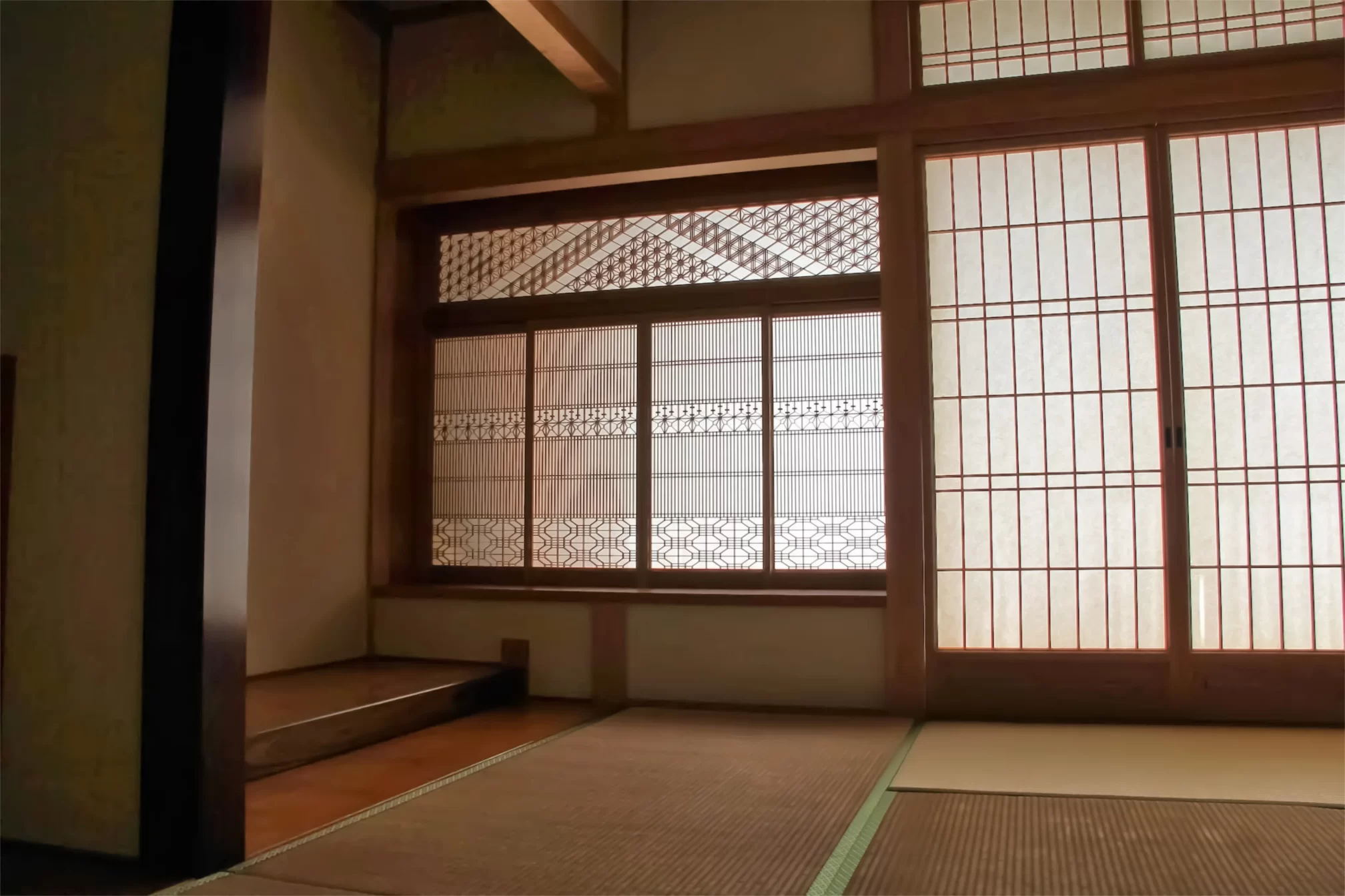
Kumiko dates back to the Kamakura period (12th-14th century), and is said to have originated as a joinery technique in Japanese architecture. “Kumiko latticework” involves grooving and angling thinly split wood, piecing tiny segments together like a puzzle to form patterns. The hand tools, which include jigs, leaf planes, and draw knives, are known even in the world of Japanese joinery to take years to master.
Over 100 patterns exist, each with meaning, refined over 800 years as a traditional craft shaped by Japan’s climate and culture.
Japanese wisdom and sensibility enriched homes by incorporating gardens and seasons. As light-permeable decorative partitions, kumiko has long felt intimately familiar.
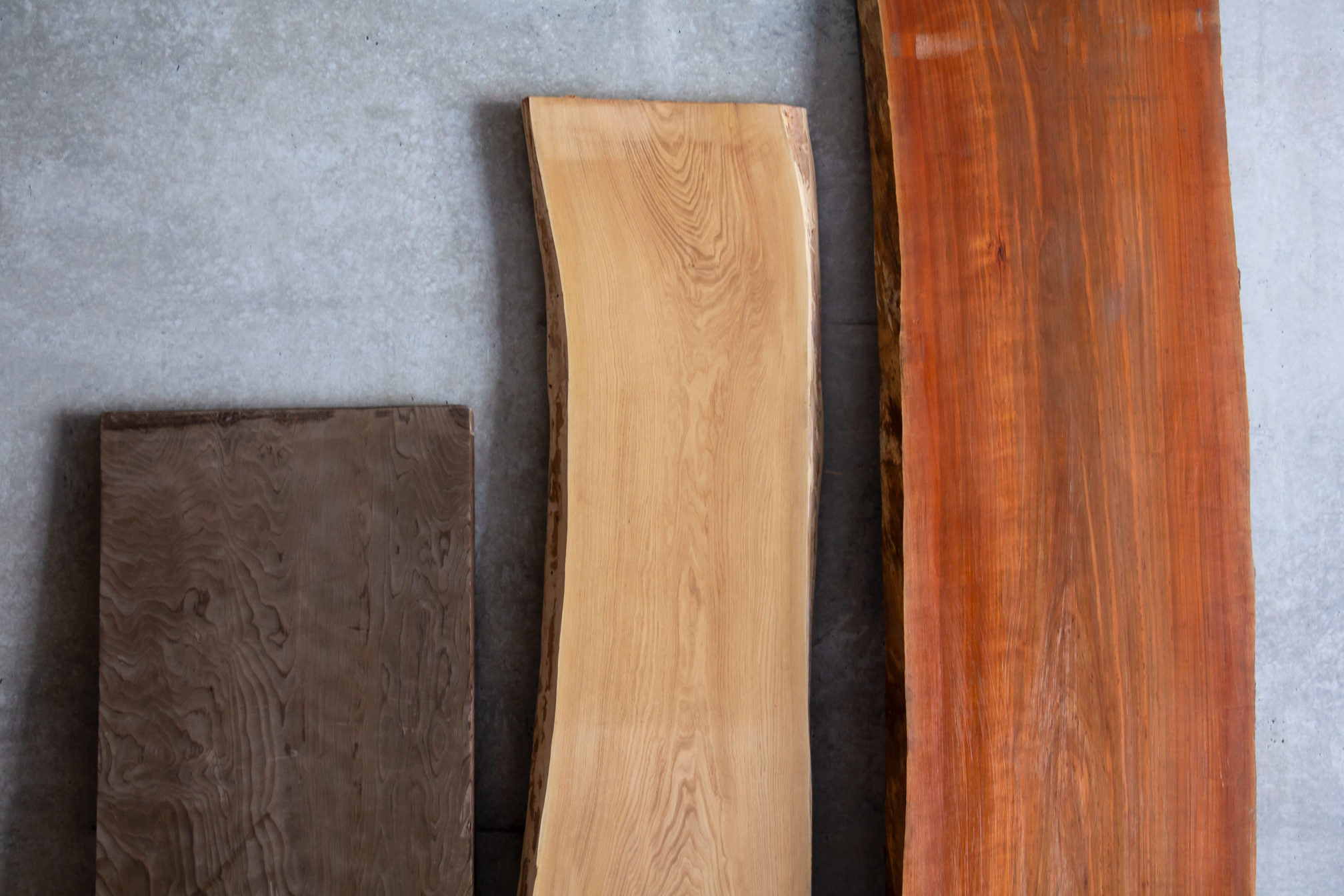
Select Woods
Wood is broadly divided into softwoods (conifers) and hardwoods (deciduous trees). For kumiko latticework, straightforward and easily workable softwoods are ideal, with only the finest selected timbers meeting our standards. Unlike man-made materials, each log varies in color, ring tightness, and grain character. Grain falls into quarter-sawn (masame) and flat-sawn (itame); misuse risks not only aesthetics but future warping.
Wood often shows “compression” (ate)—dense, dark sections from rings thickened by wind, snow, or growth stress. Harder and more prone to twisting than knots, ate is unsuitable for kumiko. Spotting its subtle signs demands the honed eye of an experienced woodworker.
Proposals Tailored to Your Space
At Yoshihara Woodworks, we specialize in crafting joinery suited to diverse spaces such as hotels, ryokans, commercial venues, and private homes by thoughtfully designing patterns that fit each context. We listen carefully to our clients’ stories before proposing bespoke solutions. Our past projects are grouped into four distinct styles.
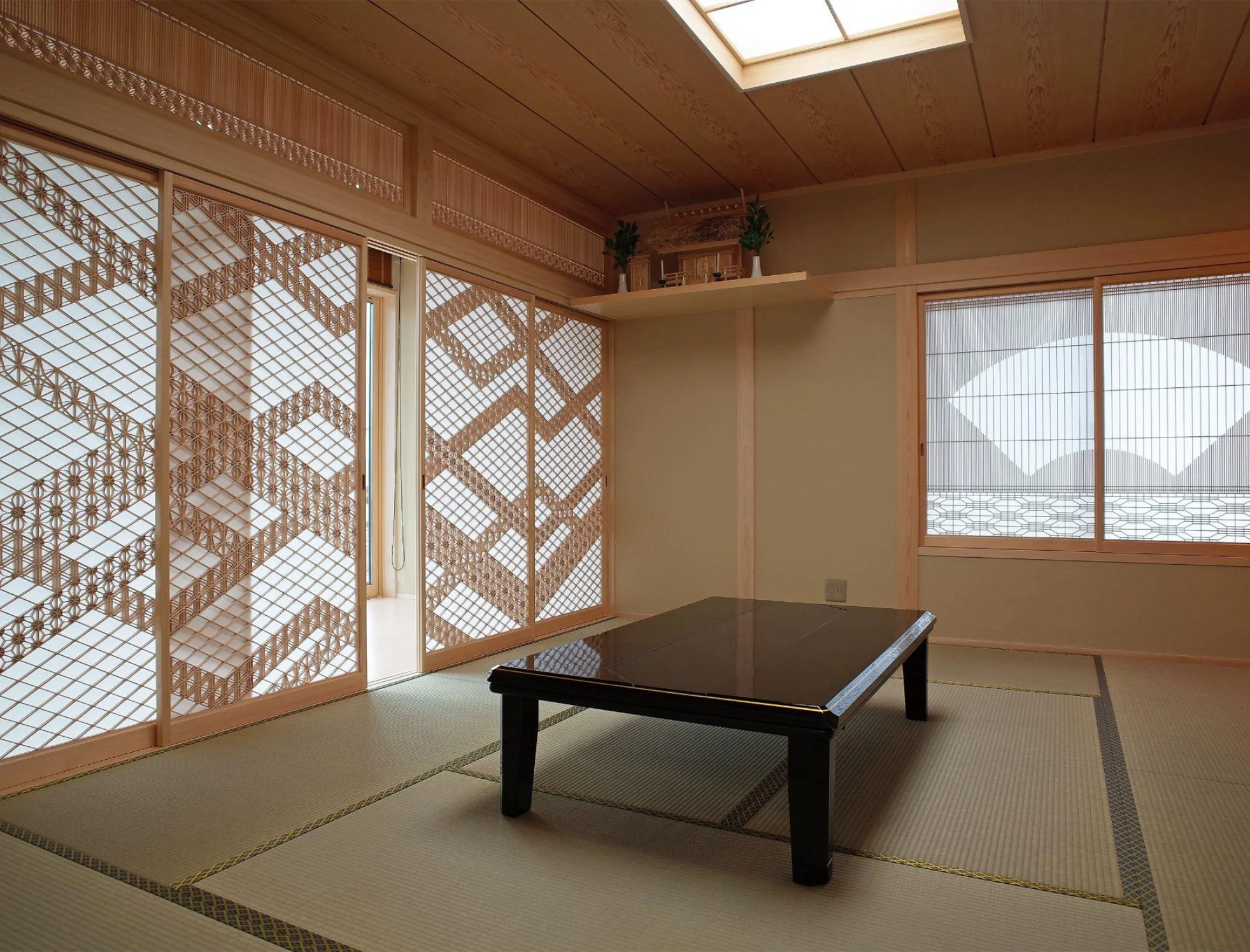
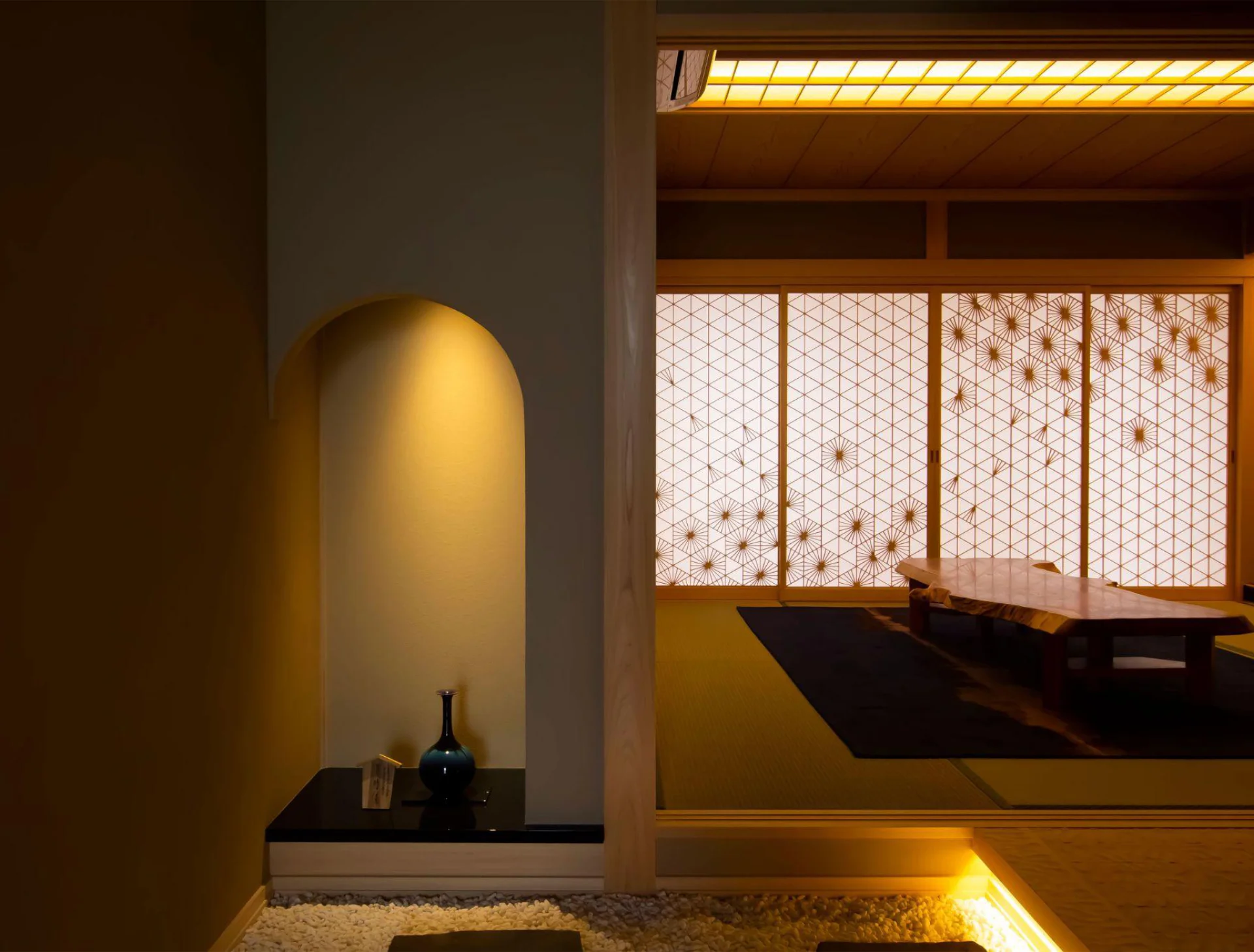


Design by Joinery Experts
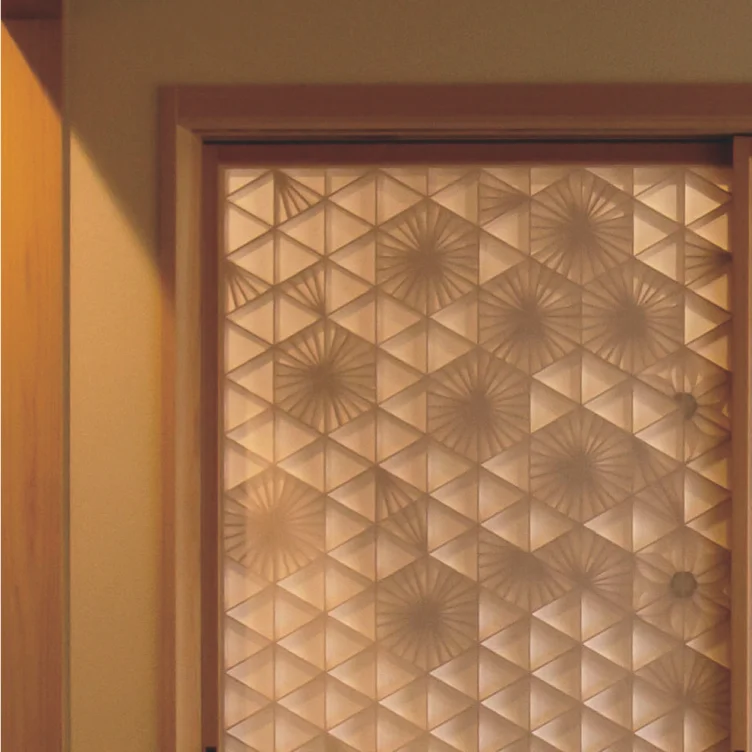
Yoshihara Woodworks creates kumiko joinery including kumiko shoji screens, acrylic shoji, double-sided kumiko, sliding doors, and hinged doors. We carefully review our clients’ intended space usage and specific requirements to propose the optimal specification.


Design and Cost
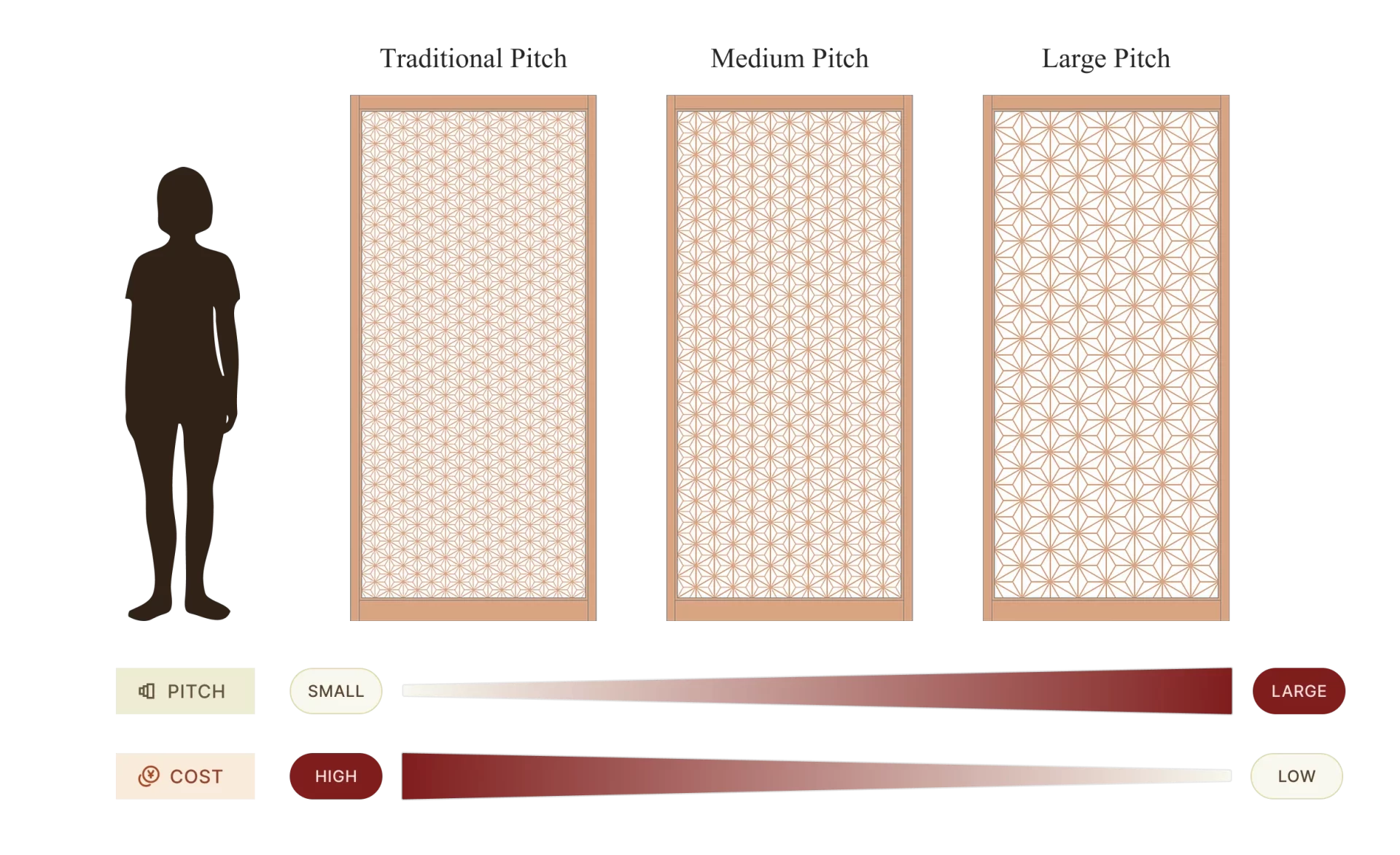
Kumiko costs (manufacture fees) vary based on the desired dimensions, patterns, and their combined design. Even a single pattern pitch alters the overall impression dramatically. We classify them from finest to coarsest as “traditional” (small pitch), “medium,” and “large pitch,” proposing the optimal stylistic choice.
Process from Order to Delivery
At Yoshihara Woodworks, with the exception of a few original products, everything is made to order on a bespoke, commission basis. We do not engage in mass production, but respond flexibly to special one-off requests. For details on how to place an order, please refer to the following page.